
Taking the Bus
Thoughts on friction.

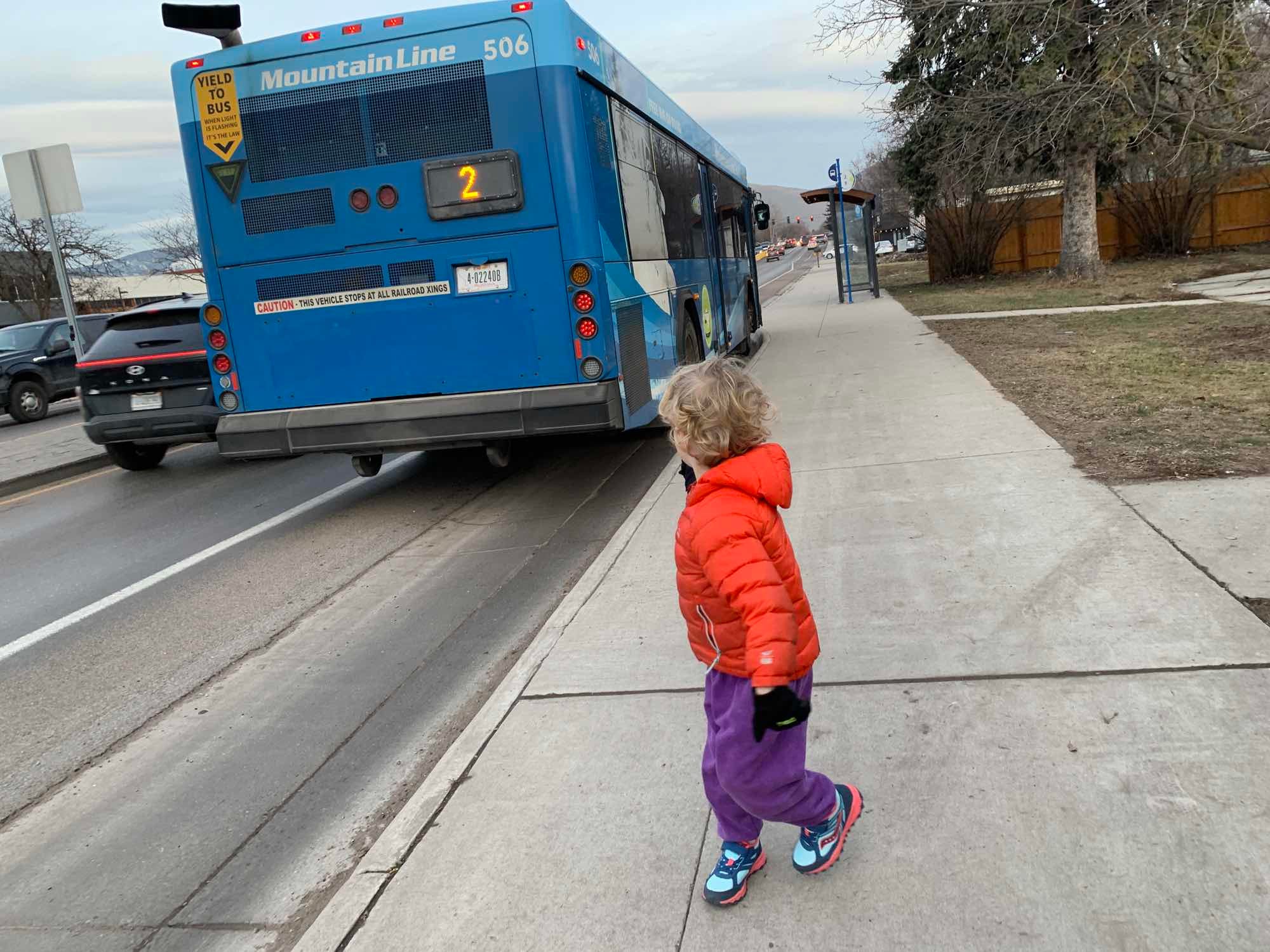
Please don’t tell my preschooler this. But when I say, “Hurry! We’re going to miss our bus!” on a Tuesday morning when I’ve cajoled him 27 times to put on his shoes, I’m bluffing. But not because we aren’t really running late for the bus.
The true bluff is the hidden fact that we’re privileged enough to choose to ride the bus. We could just hop in the Subaru in our driveway if we missed it. Or pedal our bikes the flat 1.46 miles to school. Either one would be quick and easy, and even more direct. Missing the bus is really no big deal.
In fact on one level, we’re actually adding friction into our lives by choosing public transportation. For many, it’s the only option, making daily life more difficult. Our country’s infrastructure is built around the idea of every single person driving their own car. (Nothing explodes a false sense of independence like having our car break down.) But hold on—this is not a self-righteous anti-car rant. (I hope.) If I hadn’t had a kid, I honestly don’t think I’d be riding the bus much myself right now. I typically prefer biking to driving, but have almost always chosen driving over busing.
The first time I took my son—2 years old at the time—on the bus, it was simply for fun. In true toddler clichè, he was obsessed with trucks, buses and construction vehicles. So we took the city bus to the smoothie shop one Saturday and he was totally tickled. But for everyday life and getting to school, we still rode bikes or drove. Jay was an early pedal-bike adopter and thrilled to ride the bike path to school together each morning—then we’d just strap his tiny bike on the back of ours to take it home, reversing the process in the afternoon. Until that little bike got to be too small for him—and his new one too big to easily tow. My thoughts turned again to the bus.
The first morning I asked Jay if he wanted to ride the bus to school, he was ready to go in record time. Now that it’s become part of our routine, he literally races to the bus stop, marching to his preferred seat in the way back. After we hop off, he waves and yells, “Bye, bus!” as it pulls away. For him it’s an adventure, I think. For me, it’s been food for thought.
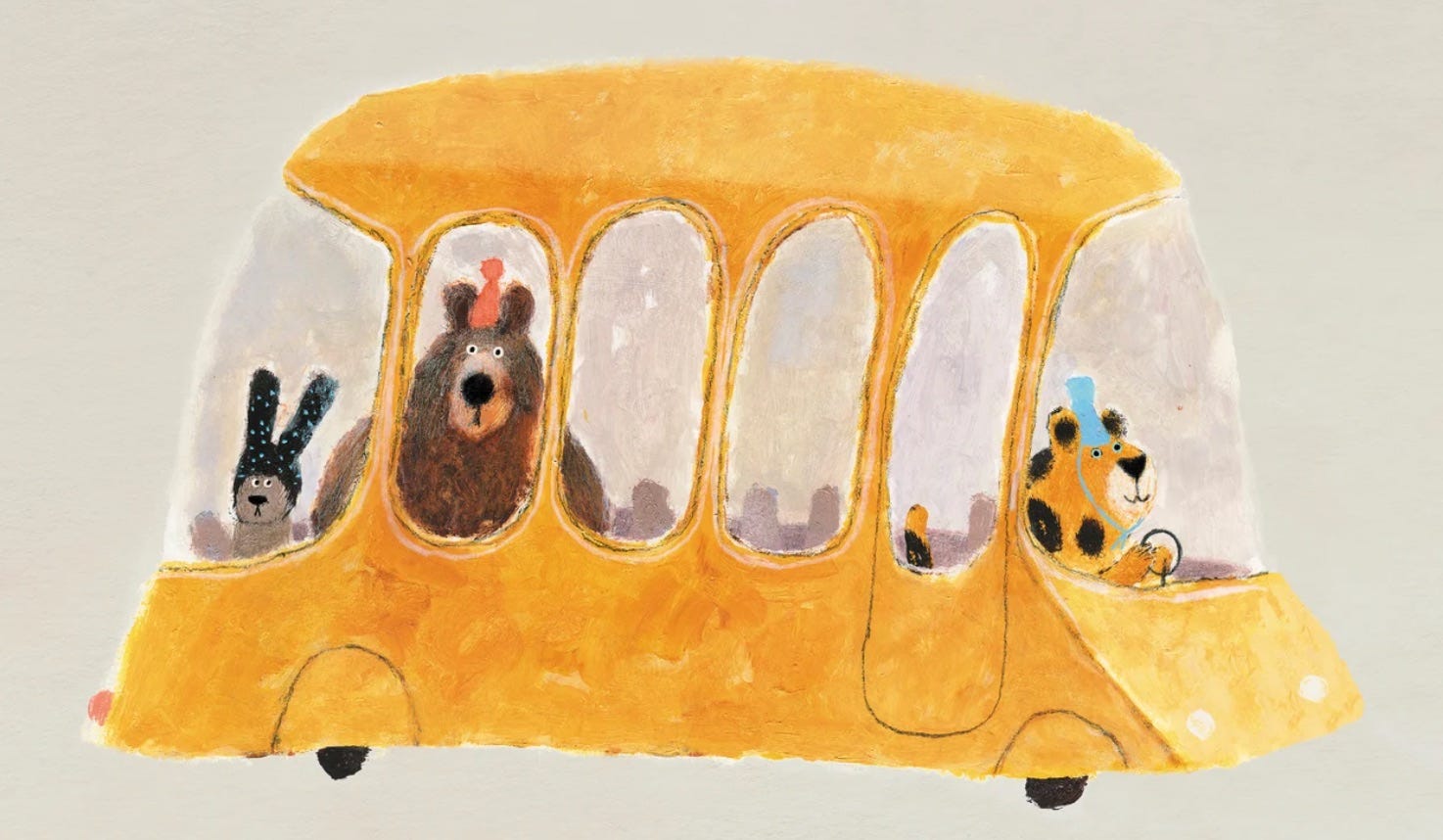
Lots of us are actively looking right now for ways to feel more engaged. We feel alienated from the communities around us. As technology removes more and more friction from our lives, it also removes the very real-life connections we actually need as humans—especially all those tiny casual interactions that together weave a web of community.
We’ve learned how to make up for unhealthy lack of “friction” in other areas of our modern lives. We voluntarily go running after work because we crave it after sitting at a desk all day. We lift weights or flip tractor tires because we know it’s good for our wellbeing. But what if connection requires friction? Waiting for the bus with Jay, I wonder if this might qualify.
That’s easy for me to ask when I work from home with a flexible schedule and our local bus system is free and reliable. Still, we’re stepping outside the perceived control and comfort of our own vehicle and into a liminal communal space. On the bus, we share time with total strangers. These are not people we met because they love the same sport, or read the same books. They’re simply our neighbors.
It’s not life-changing. We rarely even speak to the others on the bus. But one afternoon my son paused his gallop at the tall steps leading to the higher rear level of the bus. A seated man nearby extended his hand for Jay to grab for a boost up the big step. And all I can say is, that would never have happened in our car.
Amazing! I love this. I had the same thoughts when I rode the bus to grad school for a few years. You automatically feel more apart of your community. I always loved listening to the conversations of the regulars who knew each other just from riding at the same time everyday.
I loved this. The daily interactions that make life rich, the ‘friction’ of being in community. Lovely.